A 10,000-product vape store that had to grow without ads.
VapeCrush sells vapes and e-liquid online, in one of the most advertising-restricted categories on the internet. Meison built the Shopify store from scratch, launched more than 10,000 products, and made organic search and owned channels carry the growth, because paid never could. In the first year the store passed one million search impressions and settled above $100,000 in revenue per month.
Scope of WorkIn short
Meison built VapeCrush's Shopify store from scratch and launched over 10,000 vape products. Because vape retail cannot rely on mainstream paid advertising, growth came from SEO, a loyalty programme, email, and weekly merchandising. In year one the store passed one million search impressions, held roughly 8% click-through, and exceeded $100,000 in monthly revenue.
The constraint that decided everything else
Vape sits in the same bucket as tobacco on every major ad platform. The paid playbook that carries most e-commerce brands is closed here, and the narrow slice that stays open is easy to get wrong and expensive to get wrong twice. So the strategy wrote itself: if you cannot buy traffic on demand, the store has to earn it and then keep it. Every decision below is downstream of that one fact.
A store from zero, then ten thousand products
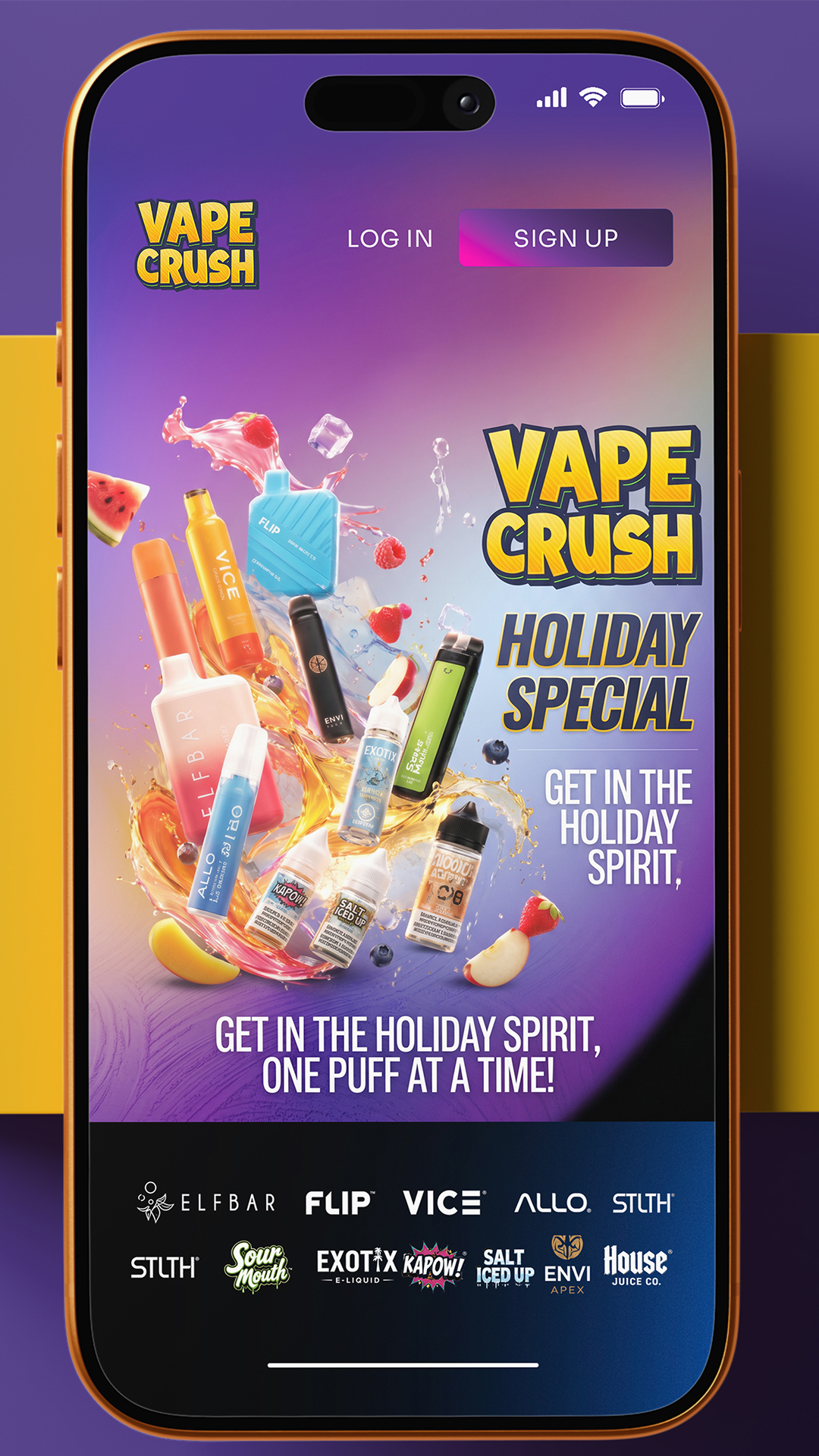
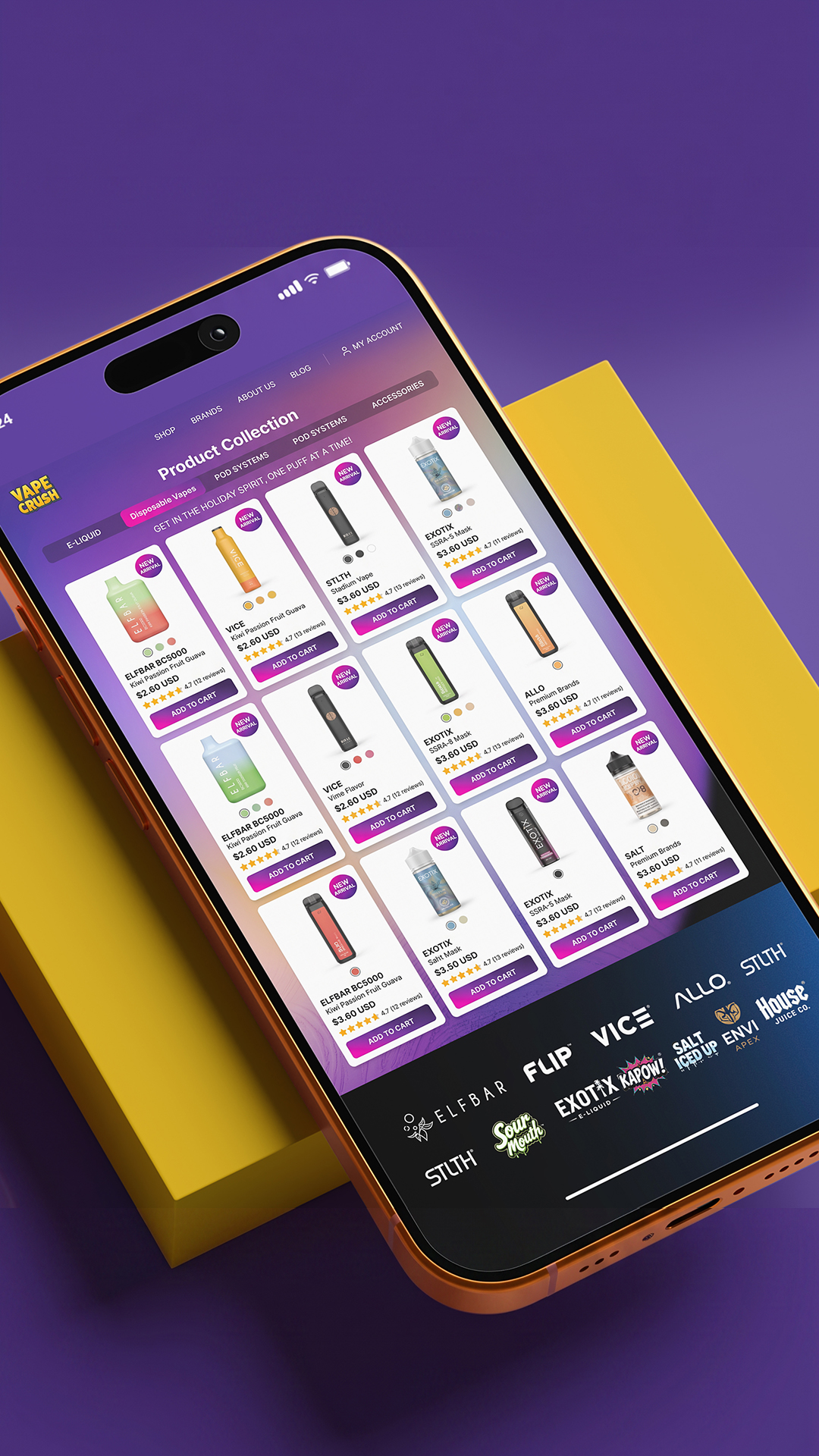
We built the Shopify store from scratch and launched over 10,000 SKUs across disposables, pod systems, e-liquid, and accessories, spanning sizes, strengths, and makes. At that count, taxonomy IS the product. Someone who knows what they want has to land on it in two taps, and someone browsing has to be able to filter by the brand they already trust, which is why the brand wall sits high on the page. Pricing, ratings, and new-arrival flags are visible before anyone opens a product, because in this category the decision is made in the grid, not on the product page.
The design had to feel like the category
Vape buyers are not shopping for appliances. We built the brand system loud on purpose - saturated colour, heavy type, product-forward campaign art - so the store reads like the shelf it competes with. That is also what makes seasonal campaigns cheap to run: the template was designed to be restyled for a promotion in an afternoon instead of rebuilt. See our web design work for how we approach builds like this.
Rewards, because the second order is where the margin lives
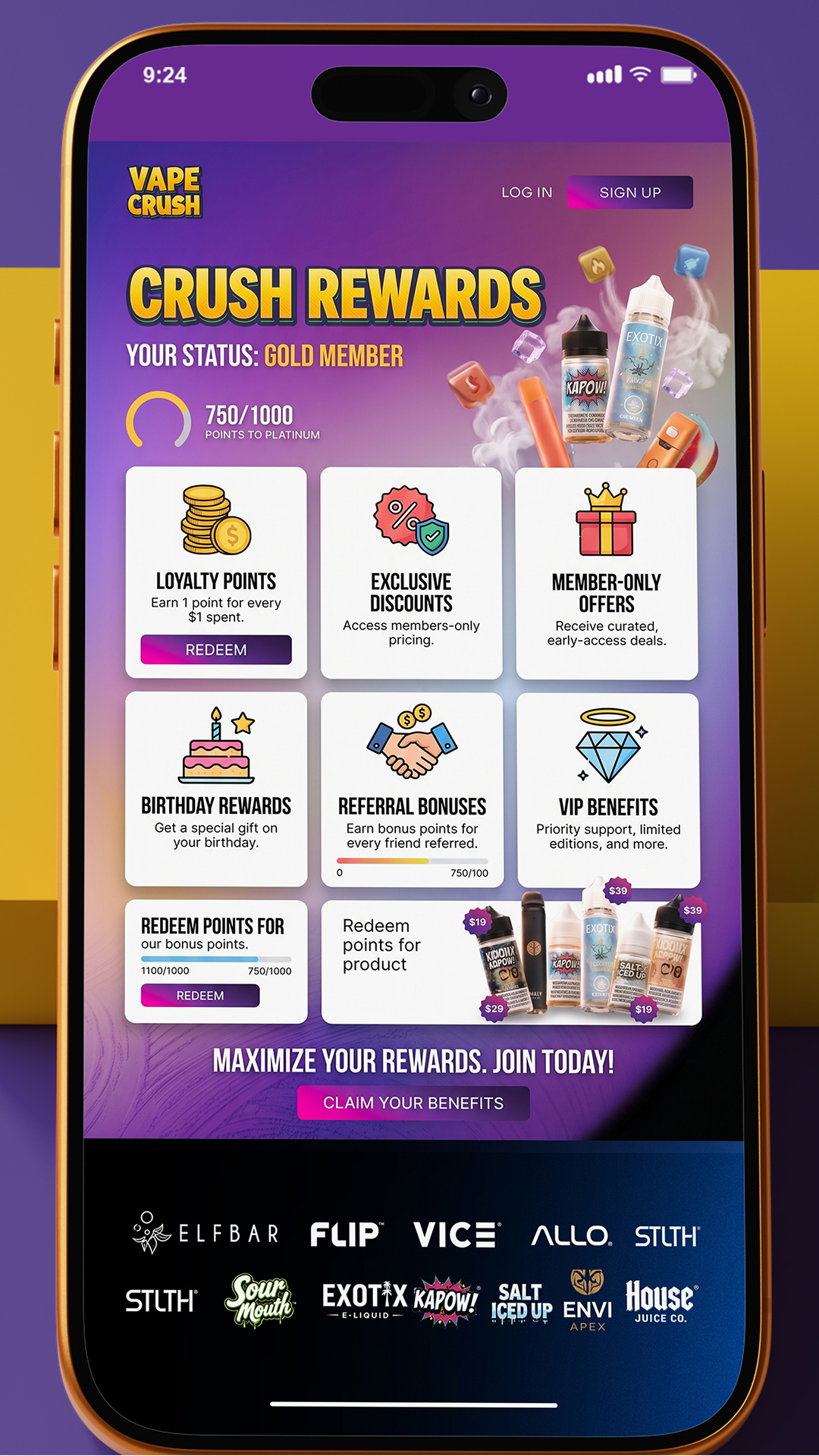
When you cannot buy new customers at will, the ones you have get expensive to lose. Crush Rewards gives points on every dollar, member-only pricing, early access, birthday and referral bonuses, and a visible tier track so progress toward the next status is always on screen. Referral bonuses matter twice as much in a restricted category: they are one of the few acquisition channels the ad platforms cannot switch off.
Merchandising on a weekly clock
We ran reports every week on what was actually selling, then moved the winners forward and the dead stock out of the way. Deals and discounts were built around those reports rather than a calendar, and the email list did the rest: newsletters to existing customers, campaign sends to leads who had shown intent but not bought. Owned channels carry disproportionate weight when paid is restricted, so the list is treated as an asset, not an afterthought.
Search had to carry it, so search got the attention
With paid capped, SEO was not one channel among many - it was the growth plan. Ten thousand products is ten thousand chances to rank or ten thousand chances to publish thin, duplicated pages, and the difference between those two outcomes is structure: one clear intent per page, categories built around how people actually search for vapes rather than how a warehouse organises them, and no near-duplicate pages competing with each other. In the first year the store passed one million search impressions and held a click-through rate around 8%, which is what happens when the listing matches the intent instead of shouting at it. Revenue settled above $100,000 a month.
If you sell in a restricted category, read this part
This build is not a template you can lift. It worked because the constraint was accepted early instead of argued with. If your category is restricted, the honest answer is that growth will be slower to start and harder to fake, and that owned channels - search, email, loyalty, referral - are the only ones nobody can revoke. If you want a store that runs on paid acquisition from day one, this is not the model, and we would tell you that on the first call.
Want work like this for your business?
Tell us what you sell and where you need more of it. We will come back with the most practical next step.